Wind Types
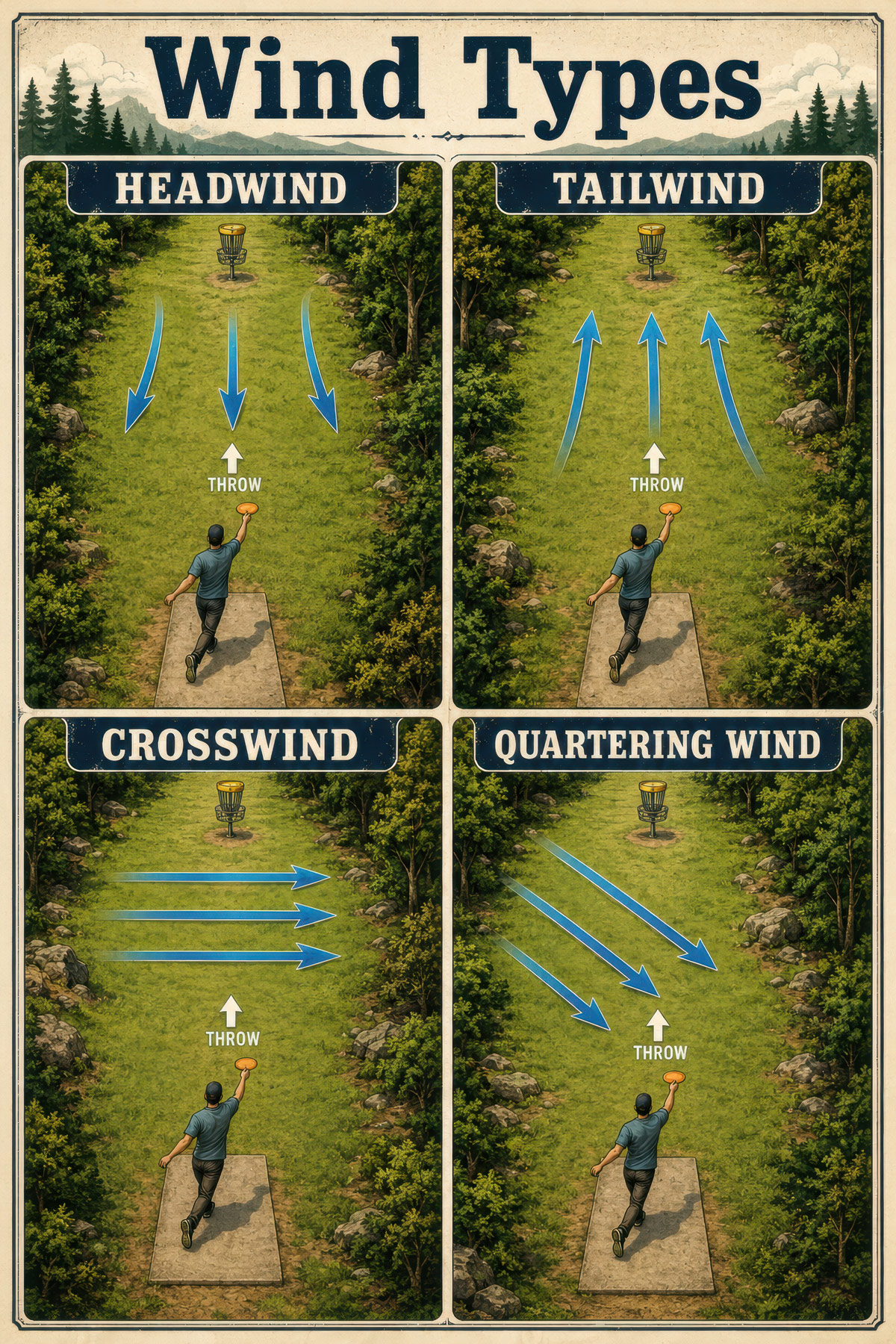
Definition: Wind Types are common names for how moving air relates to the intended direction of a disc golf throw. A headwind opposes the shot; a tailwind travels broadly with it; a crosswind moves across its line; and a quartering wind approaches diagonally, combining along-line and sideways components. These are player-relative descriptions. The same west-to-east breeze can be a tailwind on one hole, a headwind on the reverse line, and a crosswind on a hole facing north. Wind strength, gustiness and shifts in direction are additional factors which must be considered. The terms tell us which conditions to investigate, not exactly what any particular disc must do.
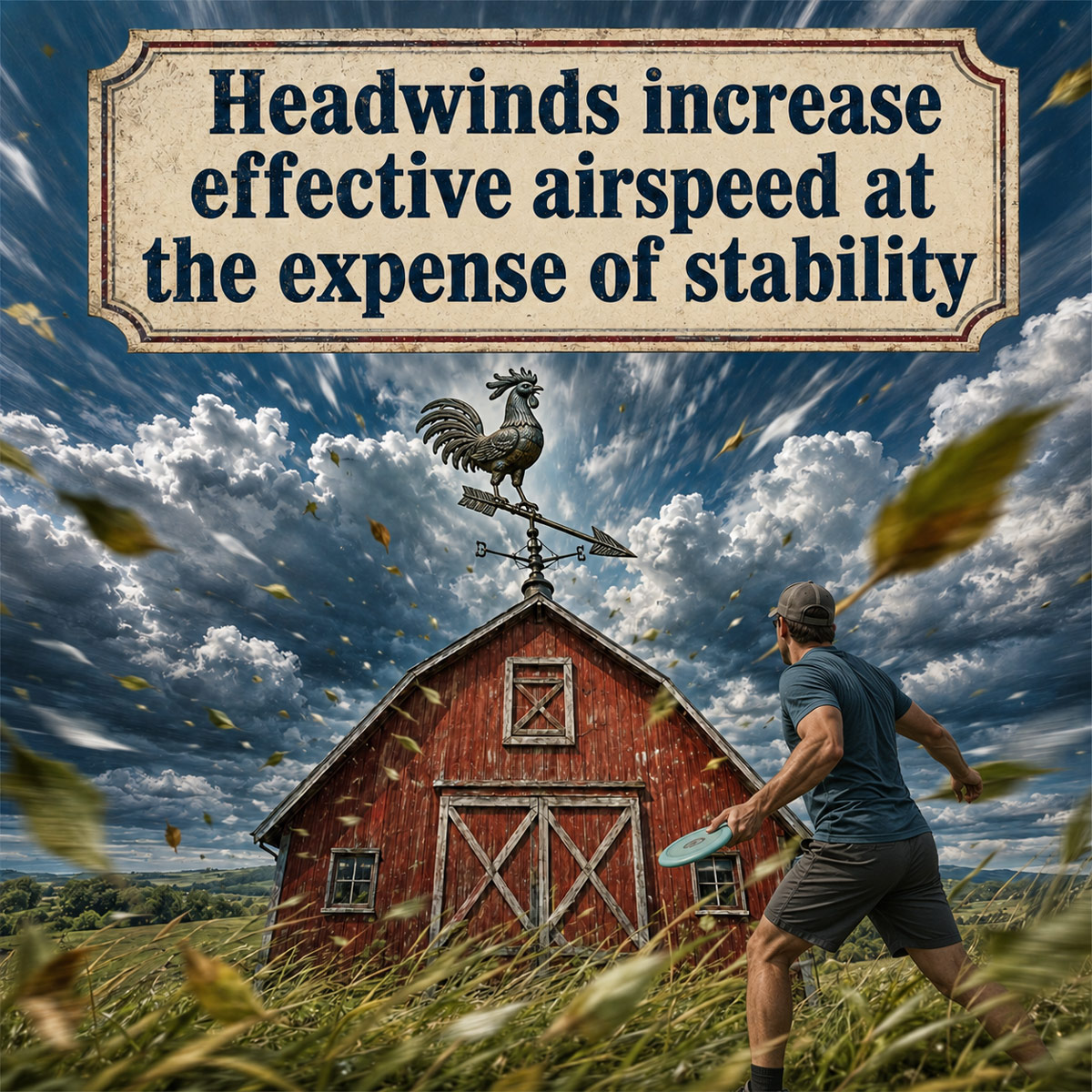
Why It Matters: The value of wind vocabulary is diagnostic clarity. “It was windy” cannot explain why one disc climbed and another dropped. Identifying where the air came from, whether it changed along the route, and how the disc was tilted makes a useful discussion possible. For a headwind, relative airspeed may increase; for a tailwind it may decrease; a crosswind makes plate orientation especially important. A quartering wind combines those directional concerns. Learning the distinctions also prevents a common error: carrying the wind read from one throw into the next without checking whether the player has changed direction, elevation or exposure.
Term Observations:
- Imagine a breeze moving from west to east. Throw east: tailwind. Throw west: headwind. Throw north: crosswind arriving from the left. You changed the label without negotiating new weather.
- Name the source. Meteorologists call a breeze from the west a west wind because it originates there, not because it is heading west. That small convention saves a surprising number of conversations and may prevent mistakes.
- Headwind and tailwind are not synonyms for shorter and longer. A disc traveling at 40 mph over the ground may encounter roughly 50 mph relative airflow into a directly opposed 10 mph wind or 30 mph with the same wind behind it. The numbers concern the air, not the final score.
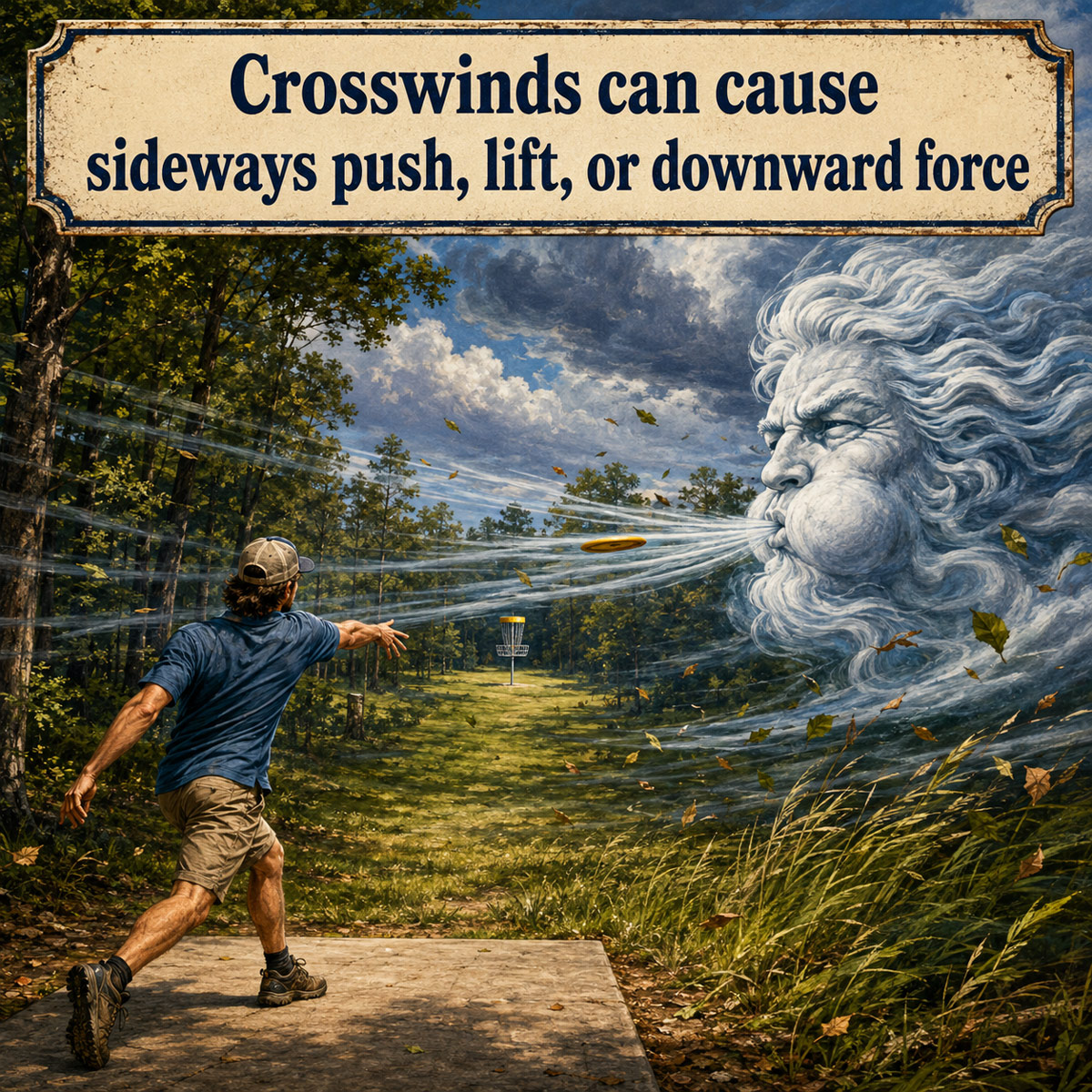
- A crosswind puts a disc’s tilt into focus. Wind crossing the top of a banked disc will not have the same effect as wind meeting its underside. A direction label alone will not predict lift or the landing angle.
- A quartering wind has both sideways and along-line influence. “Ahead-left” identifies its origin and suggests which pair of effects may matter. It does not define an exact 45-degree bearing.
- “Gusty” tells something different from “headwind.” One names changing speed; the other describes direction relative to the shot. Both can be true, and a gust can arrive after the disc has left your hand.
- The flag on the basket, moving leaves above the fairway and quiet grass by the tee may disagree. They may all be correct about different places. Wind Types begins the description; Wind Play is the decision of what to do with it.
References
References
- National Weather Service, “Glossary ‘W’ (Wind Direction; Wind Gust)”. National Weather Service, NOAA, Undated. Accessed 14 October 2026.
- NASA Glenn Research Center, “Relative Velocity”. NASA Beginners Guide to Aeronautics, Undated (live instructional page). Accessed 14 October 2026.
- Riley O’Neill, “Understanding Flight Numbers”. Innova Disc Golf, 20 December 2022. Accessed 14 October 2026.
- Ron Convers Jr., with Brendan Hickman, “Mastering the Wind, page 1”. Discraft Disc Golf Resources, Undated. Accessed 14 October 2026.
- Riley O’Neill, “Tips for Playing Disc Golf in the Wind”. Innova Disc Golf, 15 June 2023. Accessed 14 October 2026.
© 2026 North Georgia Canopy Tour Property, LLC d/b/a DiscLula. All rights reserved.