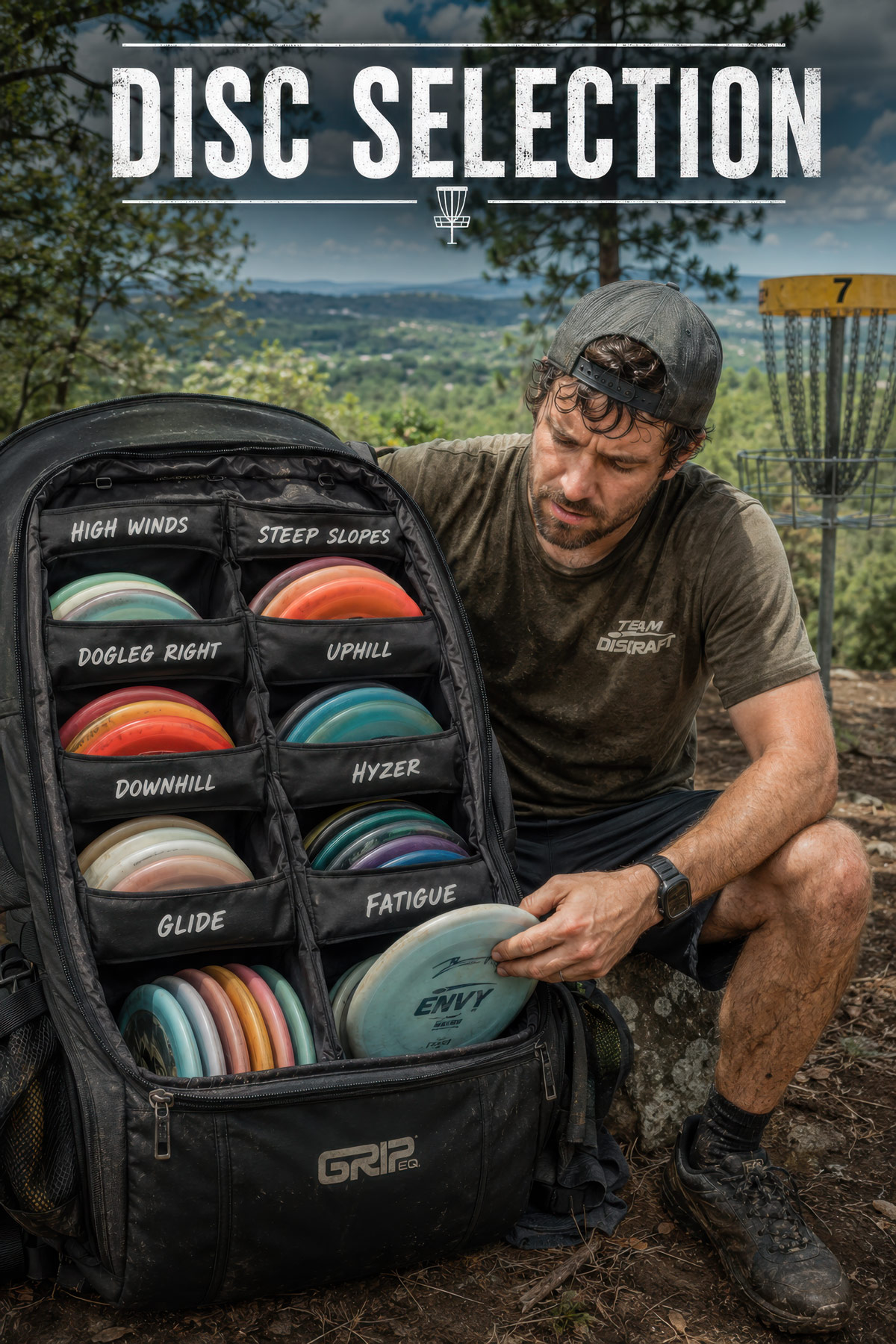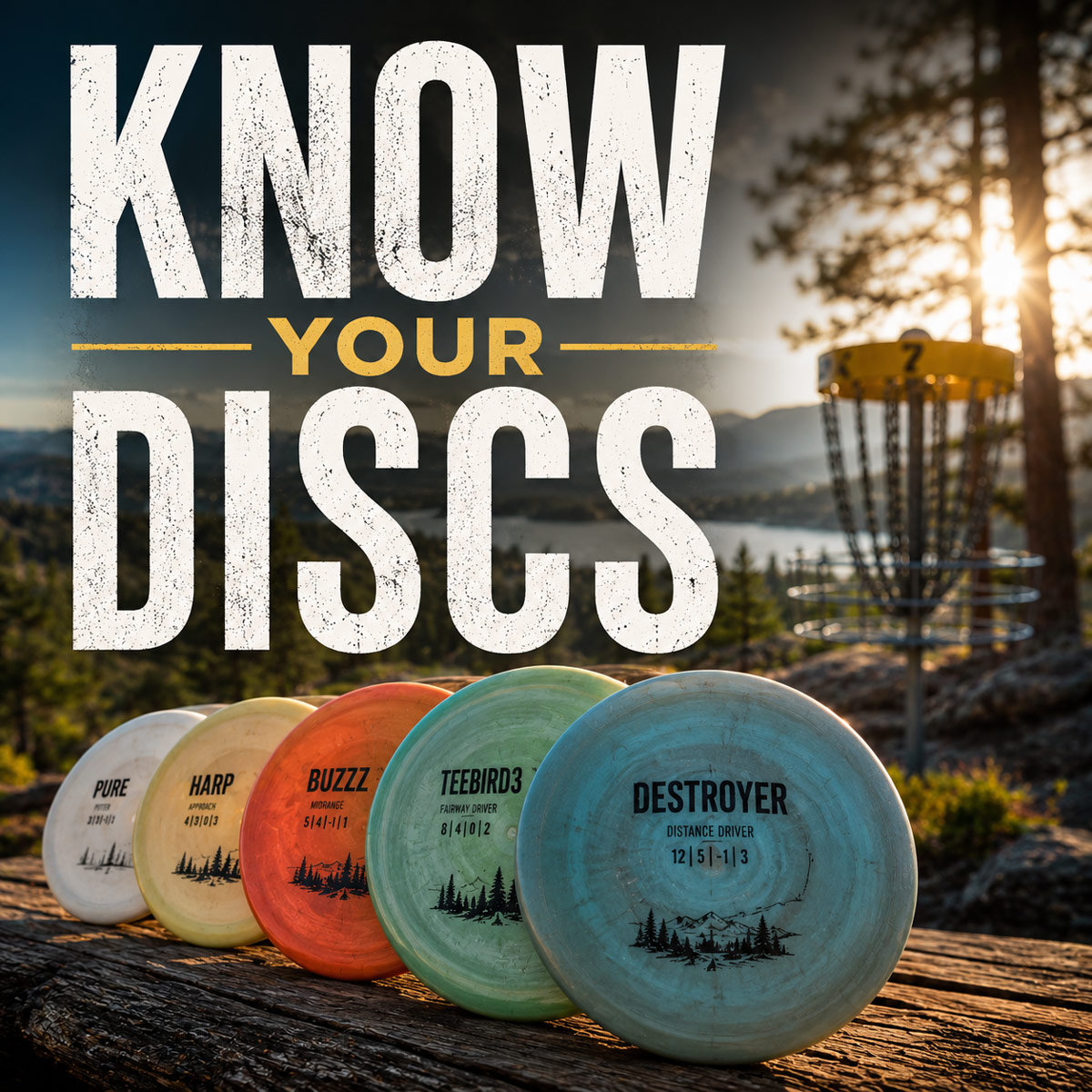
Disc Selection
Definition: Disc selection is the decision to use a particular disc for a particular throw. Players weigh the required distance and shape, the height available, wind, obstacles, landing surface, and the disc’s behavior in their own hands. Speed, glide, turn, and fade ratings help describe possible flights, but they are merely guides: a disc’s condition, weight, plastic, and the thrower’s speed and release all matter. A sound choice may be a putter on a tee, a driver on a short hole, or a worn fairway disc trusted in a crosswind. Disc selection is broader than discing down; it considers the entire toolkit, including when the familiar answer deserves to win.
Why It Matters: Discs can clear the same gap and yet provide quite different results. One may carry farther but drift into the rough; another may land short and skip into the open; a third may drop near the edge of a protected green. Selection links the intended flight to the next lie before the disc leaves the hand. Disc selection considers far more than a printed number and in the right hands is an intuitive feeling as much as a science. In practice, learn which discs produce which outcomes at your usual effort and in changing conditions. During a scored round, the useful question is not 'What is the best disc?' but 'What is the best fit for this throw?'
Term Observations:
- A disc's flight numbers are a résumé, not a sworn affidavit. They describe a design intention; your release and the day's weather conduct the decisive interview.
- Before reaching into the bag, state the assignment in one breath: low ceiling, gentle left finish, open landing, little skip. That short description is a filter against picking a disc merely because it has been impressive lately.
- The same mold is not always the same tool. Weight, plastic, and wear change how discs behave. Learn the specific discs you carry rather than treating a factory label as a complete flight chart.
- One basket, three routes: an open high approach, a narrow straight window, and a low skip around a guardian tree. Even when the distance is identical, the preferred disc may be different because the routes demand different shapes and landings.
- Wind selects with you. A familiar disc that behaves gently in still air may turn or drift differently when gusts expose its flight plate; observe what actually happens instead of declaring one stability number 'windproof.'
- Build a small personal flight notebook: the disc, a usual throwing style, a realistic carry range, and the direction and severity of its misses. A note such as 'reliable straight forehand at moderate power' will serve you better than memorizing twenty catalogs.
- Disc selection includes the right to decline an exciting shot. If none of the discs you can throw comfortably gives a reasonable line through a tiny window, choose a different route before changing plastic.
- The best selection becomes uninteresting immediately after release. The flight does what was asked, the lie stays playable, and nobody discusses what an ingenious choice it was.
References
References
- Riley O’Neill. Flight Numbers Made Simple. Innova Disc Golf, 21 April 2026. View source. Accessed 14 October 2026.
- Innova Disc Golf. Flight Ratings System. Innova Disc Golf, undated. View source. Accessed 14 October 2026.
- Jacob Arvidson. Disc Golf Discs Explained: When & How To Throw Fairway Drivers. UDisc / Release Point, 28 August 2020. View source. Accessed 14 October 2026.
- Riley O’Neill. Master Your Approach Game. Innova Disc Golf, 19 June 2026. View source. Accessed 14 October 2026.
© 2026 North Georgia Canopy Tour Property, LLC d/b/a DiscLula. All rights reserved.