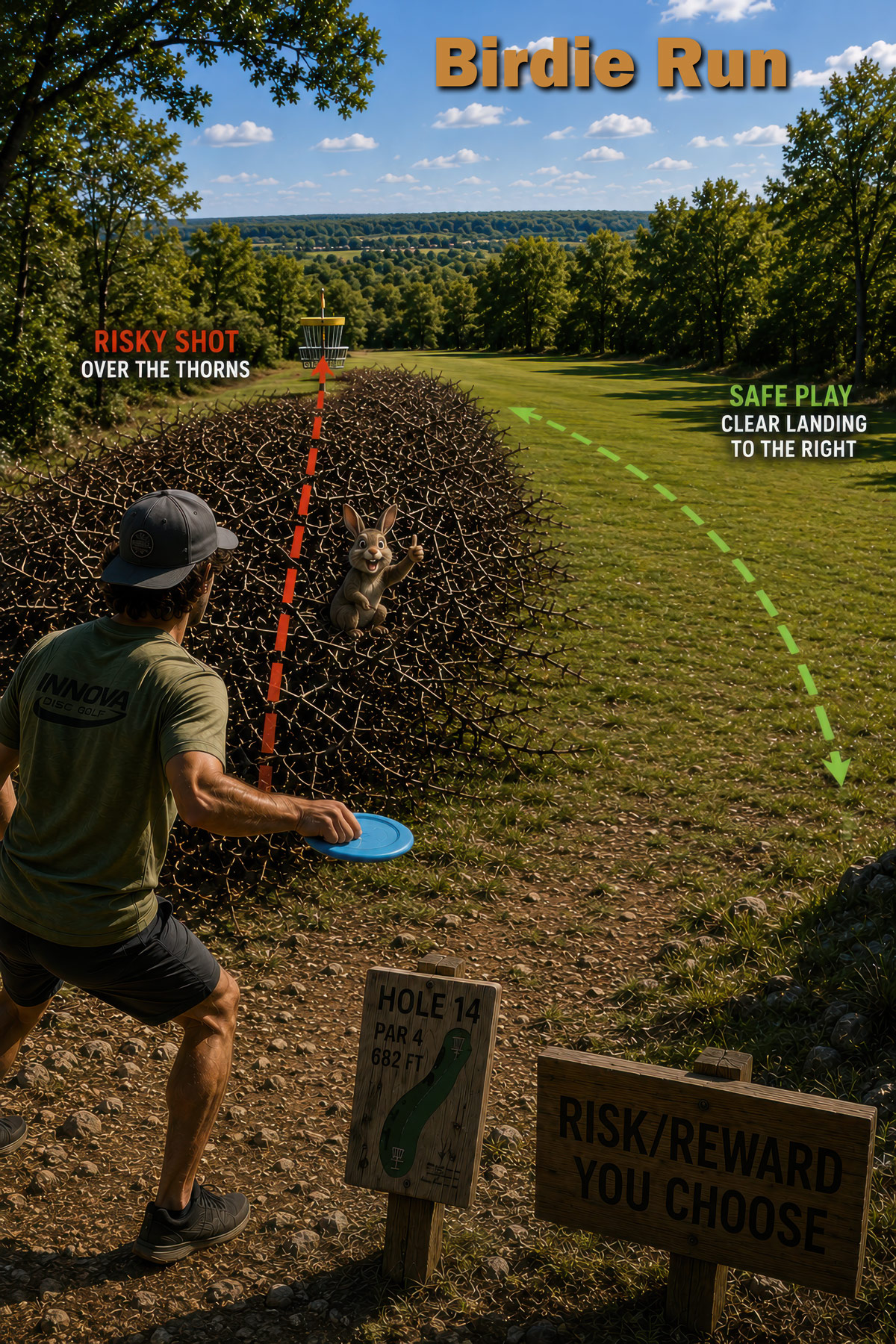
Birdie Run
Definition: A birdie run is a deliberate attempt to make a throw that would finish a hole one stroke under par, rather than merely leave a comfortable next putt. It may be a long putt or a throw-in attempt from farther away. The player gives the target a genuine chance and accepts that a miss may travel too far. A run need not be reckless, fast, or theatrical: a softly lofted bid can still have an honest route into the chains. The phrase also appears informally for a stretch of consecutive birdies, but this entry concerns one attacking attempt; Birdie Streak describes the sequence of scores.
Why It Matters: The difference between an admirable bid and an expensive mistake often lies behind the basket. On level grass with open space, a miss may leave a short, ordinary comeback. Near a sharp drop-off, gusting crosswind, or out-of-bounds line, the same putting distance can present a much larger cost. The choice should weigh your demonstrated make range, the probable path of a miss, and whether this particular score is worth pursuing. A deficit late in a round can change the value of the opportunity without changing the physical difficulty of the throw. A birdie run is a scoring decision, not a test of how loudly you believe in yourself.
Term Observations:
- First look through the chains, then past them. Identify where the disc will likely land if it sails high or glances off the cage. The backside of the green is part of the target calculation.
- A floated bid can be a real bid. Height, spin, angle, and pace affect both its chance to catch the target and its travel after a miss; choosing less speed is not automatically surrender.
- Picture two identical fifteen-meter putts: one across flat turf with a clear return, the other aimed toward a basket perched above a bank. The distance does not change. The price of missing does.
- Name the score correctly. A second shot on a par-four hole offers an eagle if it goes in; a third shot offers birdie. 'Run it' describes intent; the score still comes from the hole's par and your throw count.
- Score pressure should sharpen the question rather than replace it. If a birdie is essential, the higher-risk bid may be rational; if a par protects the result you need, the sensible option may change.
- Keep a small personal record of actual makes and the length of missed comebacks under comparable conditions. An unforgettable long make deserves celebration, not unilateral authority over future decisions.
- The run lasts one throw. Its consequence can last two.
- An honest attempt need not end in a birdie to be correctly chosen. Judge the decision from the information available before release, then judge the execution separately.
References
References
- Professional Disc Golf Association. 808 Scoring. Official Rules of Disc Golf (2026 edition; page last updated 13 February 2026). Source. Accessed 14 October 2026.
- Professional Disc Golf Association. 807 Completing the Hole. Official Rules of Disc Golf (2026 edition; page last updated 31 December 2021). Source. Accessed 14 October 2026.
- Professional Disc Golf Association. 806.02 Out-of-Bounds. Official Rules of Disc Golf (2026 edition; page last updated 31 December 2025). Source. Accessed 14 October 2026.
- UDisc editorial staff. Disc Golf Putting: Common Issues & How To Improve. Release Point — The UDisc Blog (undated here; publication timestamp in search index not used as citation date). Source. Accessed 14 October 2026.
© 2026 North Georgia Canopy Tour Property, LLC d/b/a DiscLula. All rights reserved.